

Dry needling might be the most misunderstood thing I do. Some people assume it is acupuncture with a rebrand. Others picture something painful and extreme. And a few clinics around the Twin Cities market it like a magic standalone fix, which does not help anyone's expectations. So here is a straight explanation of what dry needling actually is, what it feels like, what it helps, and how I use it at Enhance PT in Stillwater.
What is dry needling, actually?
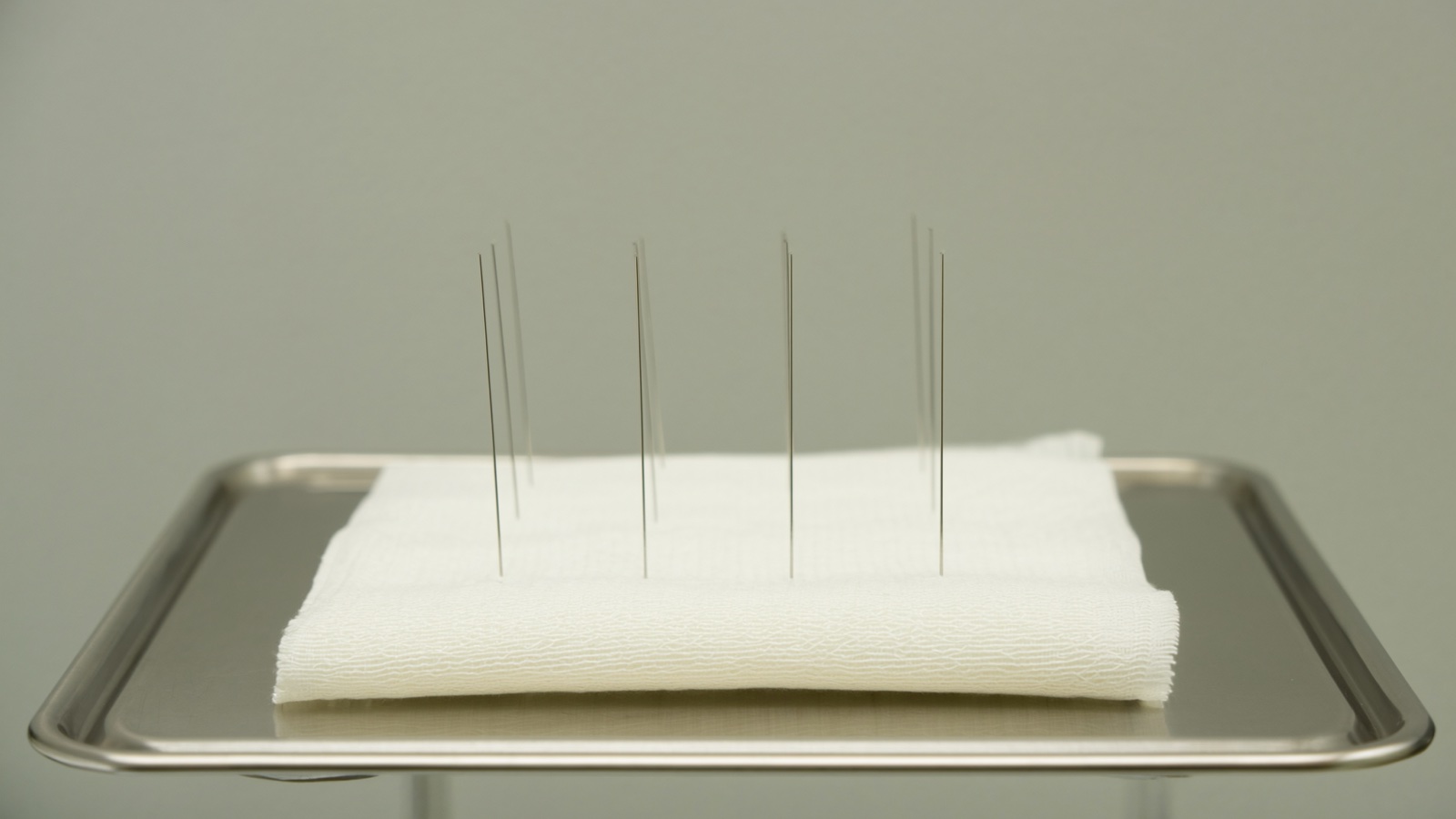
Dry needling is the use of a very thin filiform needle to release trigger points, the tight, irritable knots that form in muscle and cause both local pain and pain referred to other areas. It is called dry because nothing is injected. The needle itself is the treatment.
A trigger point is a small patch of muscle stuck in contraction. It restricts movement, stays tender, and often refers pain somewhere else entirely, which is why a trigger point in your upper trap can drive headaches and one in your glute can mimic sciatica. Foam rolling and massage can reach some of these, but a needle can reach the exact spot at the exact depth, and when it hits, the muscle often responds with a quick involuntary twitch and then lets go. That release, plus the nervous system changes that come with it, is what reduces pain and restores normal movement. Dry needling is one of the advanced techniques I trained in beyond my doctorate, and you can read more about how I use it on my dry needling page.
How is dry needling different from acupuncture?
They share a needle and nothing else. Acupuncture comes from traditional Chinese medicine and places needles along meridians to influence energy flow. Dry needling comes from Western anatomy and neurophysiology, and the needle goes into a specific muscle that a physical exam identified as part of your problem.
| Dry needling | Acupuncture | |
|---|---|---|
| Basis | Western anatomy, trigger point science | Traditional Chinese medicine, meridians |
| Goal | Release specific tight muscle tissue, restore movement | Influence energy flow and overall balance |
| Who performs it | A physical therapist with advanced training, regulated by the Minnesota Board of Physical Therapy | A licensed acupuncturist |
| Needle placement | Determined by a movement exam and palpation of your muscles | Determined by traditional point maps |
| What a session pairs with | Movement retraining, strengthening, manual therapy | Typically a standalone modality |
Neither one is a knockoff of the other. They are different tools with different goals. If your goal is to fix a movement problem, a painful muscle, or a stubborn sports injury, dry needling inside a physical therapy plan is built for exactly that.
What does dry needling feel like?
Less than you are imagining. Filiform needles are far thinner than the hypodermic needles used for shots, and most people barely feel the insertion. The sensation that matters is the twitch response, a quick, involuntary muscle jump when the needle finds the trigger point, followed sometimes by a deep, dull ache. Odd, brief, and then over.
Afterward, the treated muscle often feels like it worked out: a little heavy or sore for a day or so, then noticeably looser. I always tell clients what to expect before the first needle goes in, and like everything at my practice, it only happens with your consent. If needles are a hard no for you, I have plenty of hands-on alternatives, and we still get you better.
What conditions does dry needling help?
Dry needling helps problems where tight, irritable muscle is part of the picture: neck and back pain, tension-type headaches, hip and shoulder issues, and the stubborn muscular injuries that athletes drag around for months. It is not a cure-all, and I do not use it on everyone, but for the right problem it can change things quickly.
A few patterns I see often in Stillwater and the St. Croix Valley: desk workers with upper trap and neck trigger points feeding headaches, runners and cyclists with calf and hip flexor restrictions that never fully release with stretching, and weekend athletes with a hamstring or shoulder that improved 80 percent after an injury and then plateaued. That last group might benefit most, because a lingering trigger point can quietly limit strength and mechanics long after the original sports injury has healed. The evidence for dry needling in the upper quarter, the neck, shoulder, and upper back region where I use it most, is summarized in a peer-reviewed clinical review.
How does dry needling fit into a session at Enhance PT?
Dry needling at my practice is never a standalone gimmick. It is one tool inside a full 60-minute, one-on-one session, and it is always paired with movement work, because a released muscle that goes right back to the same mechanics will tighten up again.
A typical session might spend part of the hour on needling the muscles that are driving your symptoms, then immediately use the new range and reduced pain to retrain the movement that was limited: loading the hip, strengthening the rotator cuff, restoring your squat or your stride. That pairing is the whole point. The needle opens a window, and the exercise is what climbs through it. Because every visit at Enhance PT is a full hour with me, there is actually time to do both well, which is the core of how I practice orthopedic physical therapy.
The bottom line
Dry needling is a precise, well-tolerated way to release trigger points that are causing pain and limiting movement, it is not acupuncture, and it works best as part of a complete plan rather than a standalone service. At Enhance PT in Stillwater, it lives inside a full 60-minute one-on-one session, paired with the movement work that makes the relief stick. No physician referral is needed in Minnesota, evaluations are $200, follow-ups are $175, and HSA and FSA cards are accepted. If you have a stubborn neck, shoulder, hip, or running injury that has stopped responding to stretching and rest, schedule online or call (651) 369-1196.